











Insetgalusnews.com | Gayo Lues Folklore | Mystical Traditions Amid Customary Life
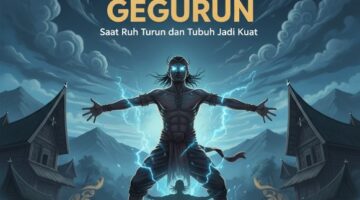
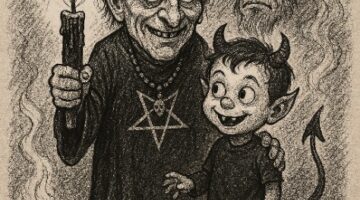
Apah Onot is not merely a tale from the past. He is a manifested presence-born from the beliefs of those who practiced dark arts, a shadowy reflection of Ntube, a spiritual worldview still whispered among the people of Gayo Lues. His name cannot be found in books but lives through oral echoes, passed down from coffee shops to quiet pengajian (Islamic gatherings) in rural villages.
He dances under bamboo bridges, dwells in humble homes, and watches silently from the corners of the soul.
ADVERTISEMENT

SCROLL TO RESUME CONTENT
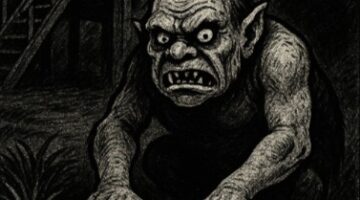
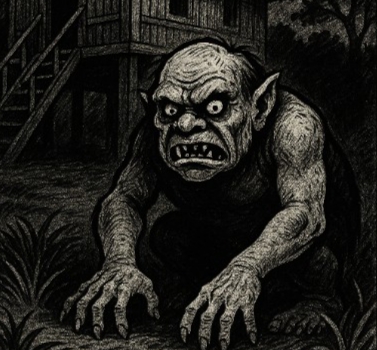
In the Gayo Lues community-particularly before the 1990s-Apah Onot was believed to be a human being who had transformed into something else. He could take the form of a calm-quacking duck, a black cat with an empty stare, or a harmless piece of coconut husk. But beware-each form was merely a veil for sinister intent.
If chased or confronted, he would leap over ditches and vanish, only to reappear in a different guise, untouchable to the naked eye.
He did not dwell in haunted forests or sacred groves. He was among us. For Apah Onot was, at his core, an ordinary person whose beliefs had strayed far from the righteous path. He is a remnant of ancient convictions-a shadow of a pre-Islamic era that never fully faded, a lingering trace of animism and dynamism resting on the fringes of faith. He lies dormant in silence but can awaken at any moment when summoned.
In old beliefs, Apah Onot was not a wild creature. He was the result of a pact between man and the unseen realm. Not a pet, but an embodiment of the practitioner’s own convictions. Those who followed this path were required to present offerings at designated times. In return, they could summon and command this being for various purposes: to spread disease, bring misfortune, or destroy others’ homes and families.
This is not fiction. In many village corners, the story still lives.
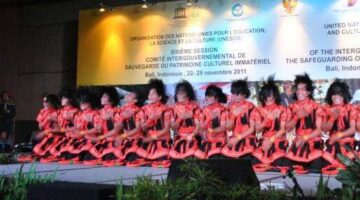
The dance beneath a bridge or in front of a jingki-a traditional rice pounder-was believed to be a mystical call. Every movement was more than art; it was prayer in motion, a coded signal in rhythm, a bridge between the seen and unseen realms. A subtle performance, intelligible only to those who had inherited the knowledge.
Yet not all bowed to the shadow of Apah Onot. There were wise individuals-keepers of ancient wisdom-believed capable of capturing him. If caught, Apah Onot would revert to human form, and a sacred pact would be made: the “Seven-Generation Oath”-a solemn vow that Apah Onot must never harm the family of his captor for seven generations. An invisible boundary, but one deeply revered.
The story of Apah Onot does not end with capture or ritual. It endures in collective memory-in the inherited fears and in the quiet moral lessons that shape the community’s ethical boundaries. He symbolizes the human desire for power, the silent festering of revenge, and the way traditional societies preserve balance through myth and symbol.
Today, Apah Onot may no longer exist. But his tale still echoes in the minds of Gayo Lues people-a silent inheritance that explains how humans once related to the invisible. He is not merely a legend. He is a reflection of the human shadow: envy, hidden intentions, and the enduring hope that moral boundaries are not to be crossed.
Cultural Notes:
Jingki: A traditional rice-pounding tool, central in rituals invoking mystical presence.
Seven-Generation Oath (Sumpah Tujuh Turunan): A spiritually binding customary pact, representing sacred social contracts between humans and spirits.
Editorial Note | Insetgalusnews.com
This article is still subject to refinement, yet it reveals the darker side of belief systems once embraced by the people of Gayo Lues. In a modern age and among a new generation, this story should not be interpreted as something to fear, but rather as a cultural documentation and a reflection of oral literature.
The tale of Apah Onot is a mirror-showing how humans tried to tame fear and command unseen forces through myth. It is a cultural legacy worth remembering, not erasing.