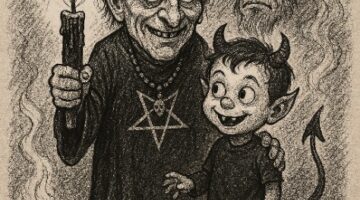













CULTURE | Insetgalusnews.com | In the quiet valleys of Gayo Lues, where the moon hangs in its fullness and the forest holds its breath in eerie stillness, a tale whispers through the mist: the story of “Ntube”. Locals believe that during these sacred nights, a mysterious dancer-naked and graceful-emerges. Not on a stage, nor for human eyes, but to perform in reverence to the unseen, the hidden dwellers of the spiritual world.
The Gayo people call her “Ntube”, a figure believed to befriend and care for spirits-not as threats, but as companions or servants. These figures are unknown, uncelebrated, but silently feared and deeply respected.
The full moon, known locally as “Ulen 14”, is a sacred time. Under its light, Ntube is said to appear with ritual offerings-not ordinary food, but carefully selected items believed to be favored by the spirits. Chief among them is “Tasak Matah”, a traditional dish consisting of various semi-cooked ingredients.
ADVERTISEMENT

SCROLL TO RESUME CONTENT
Offerings include:
Bertih: rice grains that have popped with heat, echoing the sound of time breaking the silence.
Apam Kolak: soft, round cakes as tender as whispered secrets.
Tenaruh: whole boiled eggs, symbolizing the integrity of sacred bonds.
Kurik Tasak Matah: a half-cooked whole chicken, glistening and placed in a “dalung”, a clay bowl that connects earth and spirit.
Oros Pitu Warna: seven-colored rice, a mysterious preparation whose method remains unknown-perhaps a symbolic name for the entire ritual.
Incense is burned, its spirals of smoke said to open gateways between the physical and unseen worlds. The offerings are not placed just anywhere-they’re set at the base of hills, in rock crevices, or beneath ancient trees whose leaves rarely fall.
Ntube’s dance is soundless. No drums, no flutes-only movement. Her body sways gently, in tune with an inaudible rhythm. Her hands flow like wind, her head bows in a trance, as if praying not to the sky, but to something living in the fog, deep in the thickest silence.
Elders once believed this dance was more than an offering. It was a command, a request-or perhaps, a pact. Forces were summoned. Desires were expressed. Boundaries were drawn.
Some claim to have seen her shadow from afar-graceful, vanishing into smoke. Others say they’ve heard soft songs from the underbrush, like a voice calling from another realm.
Though the legend is fading, it never truly dies. The tale of “Jema Ntube” now lingers mostly as a whisper. Younger generations no longer burn incense or offer “bertih” in clay bowls. Electric lights have replaced moonlight. And folklore lies buried beneath mobile signals and glowing screens.
Yet, for those who still believe-or simply “want” to believe-the story lives on, hidden in the folds of time, waiting for the next full moon… for one last dance filled with unanswered questions:
Do the “Jema Ntube” still walk among us?
Or are they simply waiting for the night to come again?
Editor’s Note | Insetgalusnews:
This article acknowledges its limitations and invites further exploration. While “Ntube” may reflect the mystical and darker aspects of Gayo Lues society in pre-2000s decades, today’s generation-especially Gen Z-should view such stories as cultural documentation and oral literary reflections. The tale of “Ntube” is not just a myth; it is a cultural mirror, full of symbolic meaning, reminding us that not everything invisible should be ignored.