











TAJUK RENCANA | insetgalusnews.com | The proposal to change the status of Gunung Leuser National Park (TNGL) has resurfaced. This aspiration stems from the growing concerns of local communities, particularly in Puteri Betung Subdistrict, who feel squeezed by Presidential Regulation No. 5 on the control of conservation areas, amid increasing demands for development and shrinking living space.
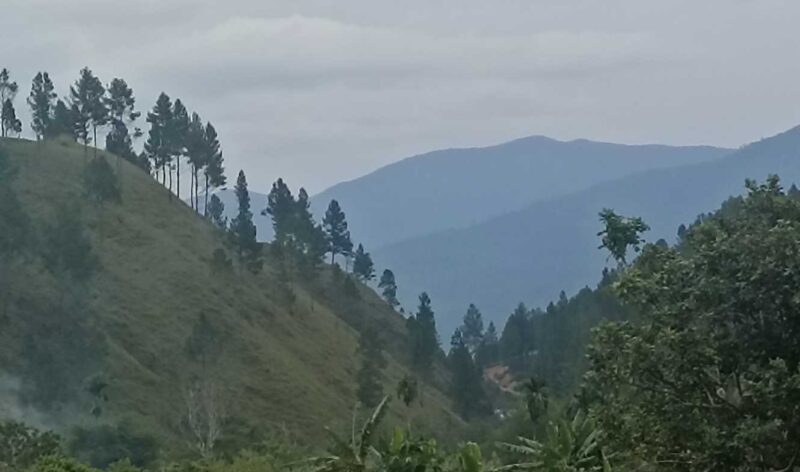
However, the public must understand that TNGL is not just an ordinary tract of land. It is a conservation area strictly protected under Law No. 5 of 1990 and is even listed as a UNESCO World Heritage Site. This means its status is not merely an administrative matter, but also a symbol of Indonesia’s global commitment to safeguarding what remains of the tropical ecosystem.
Changing the status of a conservation area is not a matter of one or two years. Nor is it about, in quotation marks, “going here and there to meet people.” It requires thorough scientific studies, recommendations from numerous institutions, and ultimately, the President’s approval. Even if all procedures are followed, approval is far from guaranteed-because the strength of TNGL’s protection lies not only in regulations but also in the scrutiny and pressure of the international community.
ADVERTISEMENT

SCROLL TO RESUME CONTENT
This is where we face a dilemma. On the one hand, local communities have the right to a decent life: to farm, to build homes, and to access basic infrastructure. On the other hand, the state has an obligation to protect biodiversity for future generations.
The government must not stand idle. If changing TNGL’s status is impossible due to legal and environmental reasons, then real alternatives must be presented-such as redistribution of non-conservation land, social forestry programs, or accelerated agrarian reform around the buffer zones. Or, the most feasible option: propose enclaves within TNGL. Do not leave communities trapped in false hopes that never result in decisions.
In 1976, the government formalized this through the Minister of Agriculture’s Decree No. 697/Kpts/Um/12/1976. Then in 1998, the existence of enclaves covering approximately 12 kilometers-corridors that are also vital wildlife routes-was reaffirmed. At that time, the total enclave area allocated by the government reached 2,772.9 hectares, divided into two regions: Gumpang (1,796 hectares) and Marpunge (976.9 hectares).
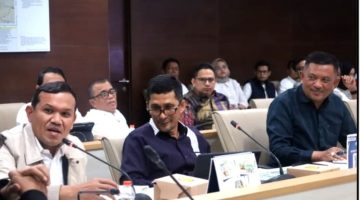
The editorial team supports the Gayo Lues Regent’s efforts to fight for the rights of his people. But that struggle must be realistic, grounded in law, regulations, and backed by long-term ecological scientific studies. It is not enough to simply submit a few sheets of paper. TNGL cannot be damaged without provoking external global pressure, but neither should the people be left living within stifling limits. Let us fight for the residents of Puteri Betung.
Editorial | insetgalusnews | provides critical and accurate information on current issues in Gayo Lues Regency, Aceh, Sumatra, for all Indonesians to read – enhancing knowledge, serving as social control, and offering the right of reply to institutions, individuals, or organizations mentioned by the editorial team.